


Metro Transit
Metropolitan Council - Old
I found Metro Transit most useful when I treated it as a practical ticket wallet rather than a full travel companion. It is the official mobile ticketing app from Metro Transit, developed by Metropolitan Council - Old, and its main job is straightforward: help riders handle transit tickets from a phone instead of relying on a paper purchase or a separate step before boarding. That focused purpose is also its biggest strength and its clearest boundary.
In my experience, the app makes the most sense for people who already use Metro Transit and want a quicker way to prepare for a journey. It is free, aimed at Everyone, and available for Android devices running version 6.0 or later. The current release is 4.11.0, so users with an older phone should check compatibility before planning around it.
My overall view is simple: Metro Transit is a useful convenience for regular riders, but it should be judged as a ticketing tool, not as a replacement for every transit app or navigation service. If you need to buy or manage a fare on the go, it can remove an annoying part of the trip. If you expect detailed route discovery, broad regional planning, or a polished all-in-one travel dashboard, you may still need another app beside it.
What using Metro Transit feels like in everyday travel
A focused tool for the moment before boarding
The most convincing use case is an ordinary one. Imagine leaving work and realizing you need to take Metro Transit home. With a conventional approach, you might have to find a ticket machine, handle payment at the station, or work out the purchase process while other passengers are waiting. A mobile ticketing app gives you the option of dealing with that task before you reach the platform, when you have a little more time and fewer distractions.
That change is small, but it matters. A ticketing app does not need to transform the entire journey to be valuable. It only has to make the fare step less awkward. I especially appreciate that distinction because many travel apps try to cover maps, schedules, alerts, payments, and local discoveries at once. Metro Transit keeps its identity narrower. When I open it, I know I am dealing with the fare side of a Metro Transit trip rather than searching through a crowded collection of unrelated travel features.
Related News

Why WhatsApp Messenger Still Makes Everyday Communication Feel Easy

Jurassic World: The Game Is the Better Dino Tycoon for Strategic Players

Threads in Real Life: Who Should Join, Lurk, or Leave

How SHEIN Turned Shopping Into an Endless Content Feed

How to Make Fortnite Feel Smarter on Mobile

Should You Switch to Microsoft Outlook on Mobile?
For a regular commuter, that can turn a repeated chore into a familiar routine. Open the app, prepare the appropriate ticket, and keep the phone available for inspection or boarding requirements. The exact details of a rider’s journey still matter, so I would not treat the app as permission to ignore current transit instructions. A digital ticket is helpful only when it matches the service and fare you actually intend to use.
The strongest benefit is preparation, not exploration
Metro Transit works best before the pressure of travel begins. I would rather set up a ticket while standing at home or waiting for a ride than attempt to solve payment at the last possible moment. That is one of the less obvious advantages of mobile ticketing: it moves a decision out of the boarding rush. It also gives you a single place to return to when you need to check the ticket you prepared on your phone.
This workflow is particularly useful for occasional riders who do not want to learn every ticket machine or payment procedure. A visitor can use the same basic idea as a commuter: prepare the fare digitally, keep the phone charged, and avoid making the platform the place where all decisions happen. I would still recommend that first-time users open the app before the trip rather than waiting until a vehicle is arriving. Familiarity is worth more than a last-second download.
Gallery
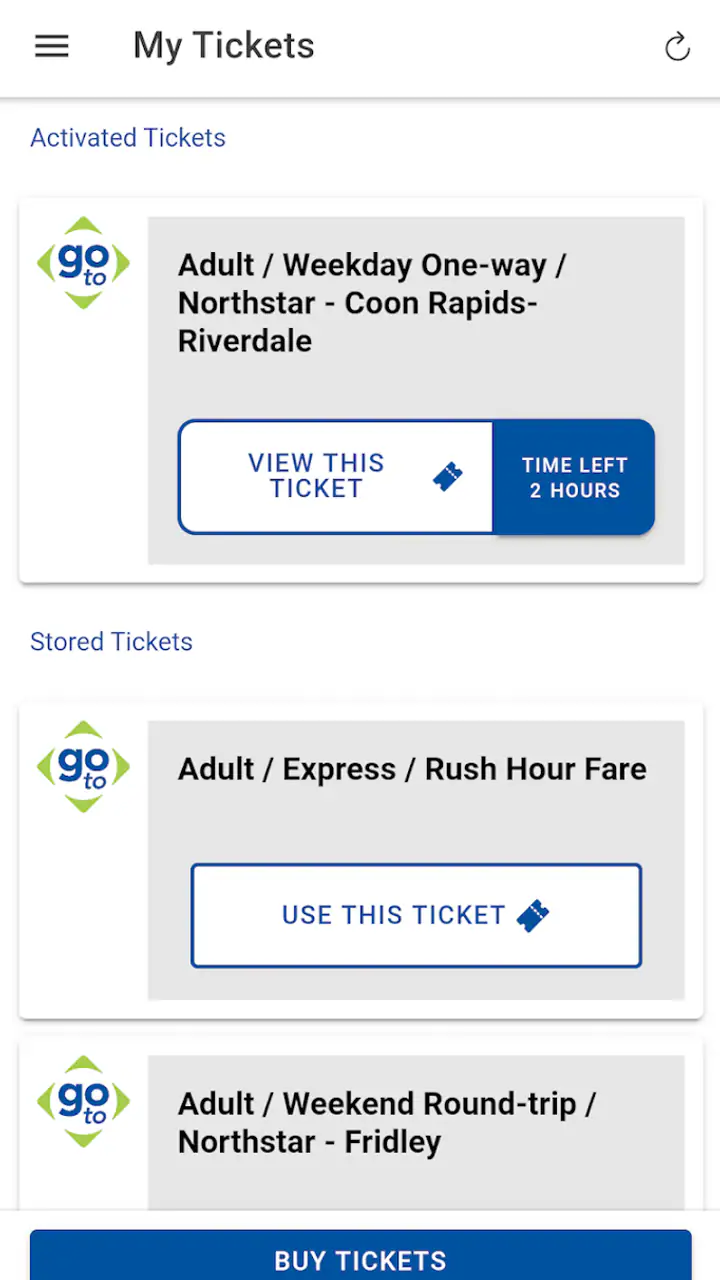
Another practical advantage is reducing dependence on physical cash or a station machine. That does not mean the app eliminates every possible travel problem. Phones can lose power, connectivity can be unreliable, and a rider can select the wrong fare if they rush. The useful lesson is to see Metro Transit as one part of a travel habit: prepare early, confirm what you bought, and keep a backup plan for the rare moment when your phone is unavailable.
Where it compares well with usual alternatives
Compared with buying a ticket at a machine, a mobile app can be more convenient because the purchase process travels with you. You do not have to locate a machine first, and you can begin the task before arriving at the station. That is a meaningful advantage for people who transfer between modes, arrive close to departure, or simply dislike handling a ticket machine while carrying bags.
Compared with using a general mapping app, Metro Transit has a different role. A mapping service may be better for comparing walking routes, checking several transport providers, or planning a complicated trip across a city. Metro Transit is more specialized: it is the place I would look when the immediate question is how to handle a Metro Transit ticket. Using a map for ticket management can feel indirect, while expecting a ticketing app to provide every planning feature can lead to disappointment.
Compared with paper tickets, the phone-based approach is easier to keep organized when you are already carrying a smartphone. The trade-off is that the ticket now depends on the device. A paper ticket does not run out of battery, and some riders will value that reliability more than digital convenience. For me, the better option depends on the journey: routine trips favor the app, while a long day with limited charging access makes a physical backup sensible.
Compared with a broad transit payment system, the dedicated app may feel less universal. Its value is strongest when Metro Transit is central to your trip. If your day involves several unrelated transport networks, you may prefer a service that combines them, even if that means giving up some of the directness of an official ticketing tool.
Small habits that make the app more dependable
The first habit I recommend is opening the app before you need it. This is not just about saving time. It lets you confirm that the app runs properly on your device, that you understand the ticket choices, and that your phone is ready for the journey. A person who installs a ticketing app while standing beside a departing vehicle is creating unnecessary risk.
The second is to think about the phone as part of the ticket. Keep enough battery for the entire trip, avoid burying the device at the bottom of a bag, and do not assume that a nearly dead phone will be convenient to present. This is a genuine trade-off with digital ticketing and one that store summaries rarely explain. The app may simplify payment, but it cannot solve a dead battery.
The third is to separate ticket preparation from route planning. I find it easier to use a dedicated map or transit planner for directions when needed, then use Metro Transit for the fare task. Keeping those jobs distinct reduces confusion. You can concentrate on where to go in one place and what ticket you need in another, rather than expecting one interface to do everything equally well.
A fourth useful habit is checking the ticket details before starting the trip, especially when you are traveling at an unusual time or using a service you do not normally take. The convenience of a few taps can encourage people to move too quickly. A moment of attention is worthwhile because the app is only helpful when the selected fare fits the actual ride.
The limitations I would take seriously
The main weakness is scope. Metro Transit is not automatically the best answer to questions such as which route is fastest, where you should transfer, or how to combine transit with walking and other transport options. If you download it expecting a complete city guide, the focused design may feel incomplete. That is not a flaw in ticketing itself, but it is a mismatch between the app’s purpose and a user’s expectations.
The second limitation is dependence on a working phone. A physical ticket machine may be slower, but it does not ask you to maintain battery life or keep your screen accessible. Riders who share phones, use an older device, or travel in situations where charging is difficult should consider whether mobile ticketing fits their routine. The minimum operating system of Android 6.0 or later makes the app accessible to many devices, but compatibility alone does not remove the practical demands of carrying a charged phone.
I also think the experience can feel less forgiving for infrequent riders. A commuter who repeats the same journey quickly learns the process. Someone who uses Metro Transit only occasionally may need more time to understand which ticket is appropriate and when to prepare it. That is why I would not recommend installing it for the first time seconds before boarding. The app can make the process easier, but it still rewards a little preparation.
The public response suggests a reasonably established but not universally loved product. Metro Transit holds an average rating of 3.1 from around one thousand ratings, alongside more than five hundred written reviews. I would read that as a reason to keep expectations measured: the app is clearly useful to many riders, yet the experience is not so effortless that every user treats it as indispensable. Ratings cannot tell me exactly what happened in each case, but they do support a balanced conclusion rather than uncritical praise.
Who should use it, and who should look elsewhere?
I would recommend Metro Transit first to regular Metro Transit riders who want a direct way to handle tickets from an Android phone. It is also a sensible choice for people who dislike station queues, prefer preparing before leaving, or want a digital alternative to carrying a paper fare. Since it is free and rated for Everyone, the barrier to trying it is low, provided the device meets the operating-system requirement.
It can also suit visitors whose trip is centered on Metro Transit. My advice would be to install and explore it before the travel day, not during a rushed transfer. That gives you time to understand the ticket flow and decide whether you are comfortable relying on your phone. A visitor who wants sightseeing suggestions, broad route comparisons, or a single tool for several transport providers should pair it with a general navigation app rather than treating Metro Transit as the whole travel plan.
I would be more cautious about recommending it to people who rarely carry a charged smartphone, who prefer cash and paper, or who need one application to coordinate multiple transportation networks. In those cases, a station purchase or a broader transit planner may be a better fit. The dedicated approach is helpful only when its narrow focus matches your needs.
Families and groups should also think about how they will manage tickets for everyone. A single phone can be convenient, but it can also become the point of failure if the device is misplaced or unavailable. I would plan the process before boarding and make sure the person holding the phone is ready to access what the group needs. That is a practical consideration rather than a reason to reject the app, but it is exactly the kind of detail that affects real travel.
What its adoption says about its role
With over one hundred thousand installs, Metro Transit is not an obscure experiment. It has reached enough riders to be a familiar option for people looking for official mobile ticketing. The developer, Metropolitan Council - Old, gives the app a clearly defined institutional identity rather than presenting it as an unrelated third-party payment tool.
Its history also shows that this is an established app rather than a brand-new release: it first appeared on November 3, 2016. That longevity is reassuring for a routine utility because ticketing is not an area where I want to depend on a temporary novelty. At the same time, a long-running app still needs to feel comfortable on current phones and remain understandable to new riders. The current version, 4.11.0, indicates an actively versioned product, but I would still judge it by how smoothly it fits into my own travel routine.
I like that the app’s identity is easy to explain to a friend: it is the official Metro Transit ticketing option for your phone. That clarity is more valuable than a long list of features. The question is not whether it can replace every travel tool; the question is whether it makes your Metro Transit fare easier to manage. For the right rider, the answer is yes.
My final recommendation
After using Metro Transit as a focused travel utility, I see it as a practical companion rather than a complete transit ecosystem. Its best quality is the way it lets riders prepare for a Metro Transit trip before the stressful part begins. The free price, Everyone age rating, broad Android compatibility, and official origin make it easy to consider, while its established presence gives it credibility as a routine ticketing choice.
The compromises are just as clear. You should not expect it to replace a map, solve every route-planning question, or remove the need to keep your phone charged. Occasional riders may need a little time to understand the process, and people who prefer paper or use several transport systems may find another option more convenient.
I recommend Metro Transit to anyone whose main need is simple, phone-based Metro Transit ticketing. Install it before your next journey, learn the ticket flow while you are not rushing, and use a separate planning tool when the route itself is complicated. With those expectations, the app does its specific job well enough to earn a place on a commuter’s phone. If you want an all-purpose travel planner, skip it as your only app; if you want a direct digital way to prepare for Metro Transit, it is worth trying.
FAQs for Metro Transit
What is Metro Transit, and what can I use it for?
Metro Transit is a public transportation app designed to help riders plan and manage trips using available bus, train, and other transit services in supported areas. It can typically provide route planning, schedules, stop information, service alerts, and real-time arrival estimates. Before downloading, check that your city or transit agency is supported, since available features and coverage may vary by location.
Does Metro Transit provide real-time arrival information and service alerts?
The app may offer live arrival predictions, departure times, route updates, and notifications about delays, cancellations, detours, or maintenance. However, the accuracy of real-time information depends on data supplied by the local transit agency and on your internet connection. When a vehicle is not transmitting data, the app may display scheduled times instead of live estimates.
Can Metro Transit help me plan a complete journey?
Yes, Metro Transit is intended to help users find routes between two locations and compare available transit options. Depending on the supported network, it may combine buses, trains, walking directions, and transfers into one itinerary. Always review the suggested route before leaving, particularly late at night or during disruptions, because construction and temporary schedule changes can affect the recommended journey.
Does Metro Transit require an internet connection or access to my location?
An internet connection is generally needed to download current schedules, retrieve service alerts, search routes, and receive real-time arrival updates. Location access can make it easier to find nearby stops and generate directions from your current position, but it may not be essential for every feature. You can usually search manually by entering an address, stop, or route.
Is Metro Transit free to download, and are there any additional costs?
Metro Transit may be free to download, but transportation fares are separate from the app itself. You may still need a ticket, travel card, mobile payment method, or cash depending on the local transit system. Mobile data charges could also apply when using maps, live updates, or route searches away from Wi-Fi. Check the app store listing and your agency’s fare rules before traveling.
Pros
- Real-time arrival information helps reduce waiting at stops.
- Supports trip planning across buses
- trains
- and other transit services.
- Service alerts make it easier to follow delays and route changes.
- Nearby stop features are useful when exploring unfamiliar areas.
- Fare and schedule details can be checked without visiting a station.
Cons
- Coverage and accuracy may vary outside the main metropolitan service area.
- Real-time updates can be delayed when agency data is unavailable.
- Some features may require location access to work properly.
- Routes and fares can be confusing for first-time public transit users.
- The app may feel less useful in areas with infrequent service.


